
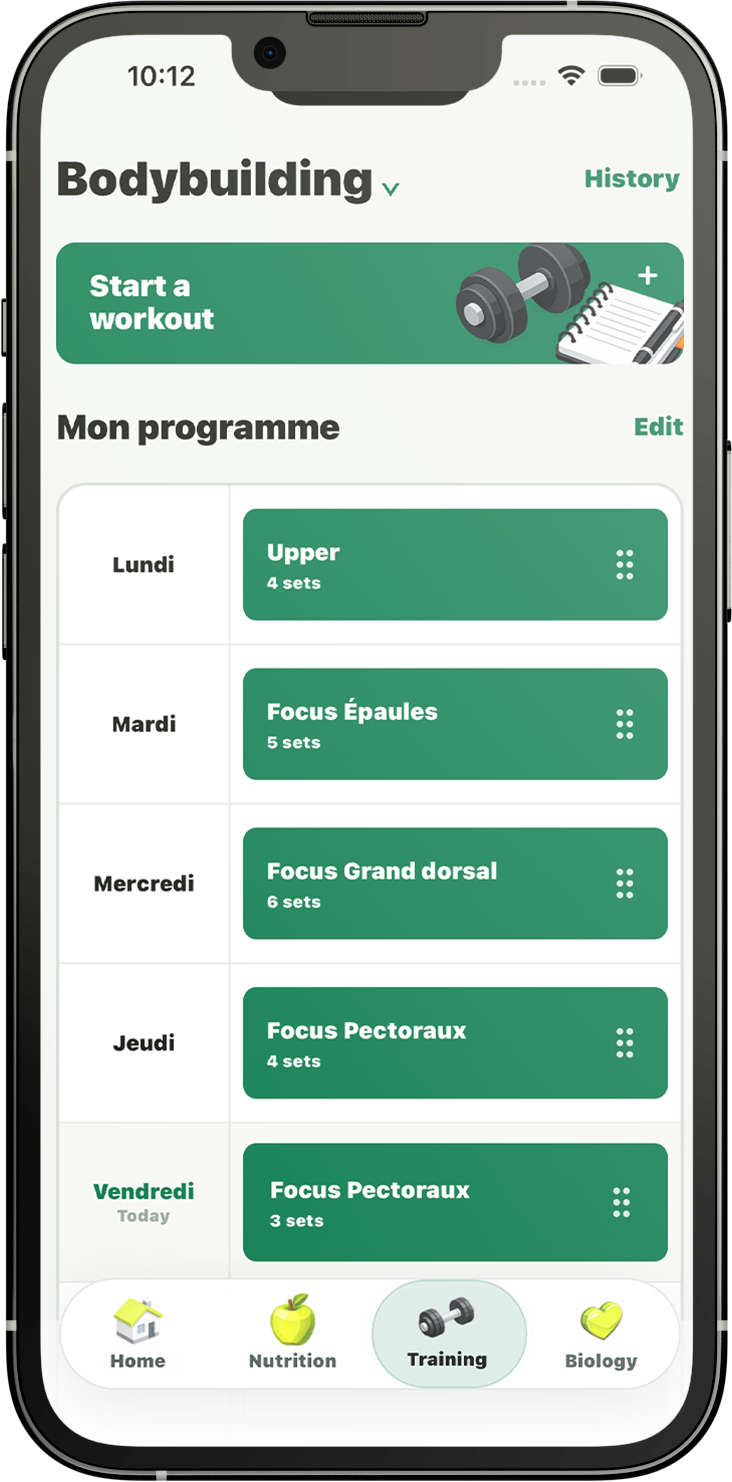
After a break, it is tempting to chase your old numbers immediately. The best return gives your body time to adapt while rebuilding a routine that is easy to maintain.
1. Start lighter than you expect
Begin at roughly 60 to 70% of the loads you used before your break. Keep two to four repetitions in reserve during the first two weeks.
This buffer limits excessive soreness and lets you focus on technique. Muscle memory will usually help your performance return faster than it did the first time.
2. Build a simple week
Two or three full-body sessions are enough. The goal is not to collect exercises, but to repeat the essential movement patterns consistently.
- One upper-body pushing movement.
- One horizontal or vertical pulling movement.
- One knee-dominant and one hip-dominant exercise.
- A small amount of focused shoulder, arm, and core work.
3. Progress one variable at a time
Record your sets, reps, and loads. From one session to the next, add a repetition or a small amount of weight, but avoid increasing everything at once.
Slow, visible progress is more motivating than an aggressive comeback followed by a forced week off. Consistency remains the best measure of success.
4. Treat recovery like a workout
Sleep, protein, and an appropriate calorie intake directly affect recovery. Aim for simple meals, enough water, and sleep times that are as regular as possible.
Mild muscular discomfort can be normal. Sharp, joint-related, or worsening pain means you should stop the movement and seek advice from a healthcare professional.